Not all plastic is the same.
And not all biodegradable claims are equal.
A respected ocean-conservation group recently published a report calling biodegradable plastics a “false solution” to ocean pollution. They were right about a lot of plastics. They were wrong about ours.
WHERE THIS CONVERSATION STARTS
The ocean has a plastic problem. That part is true.
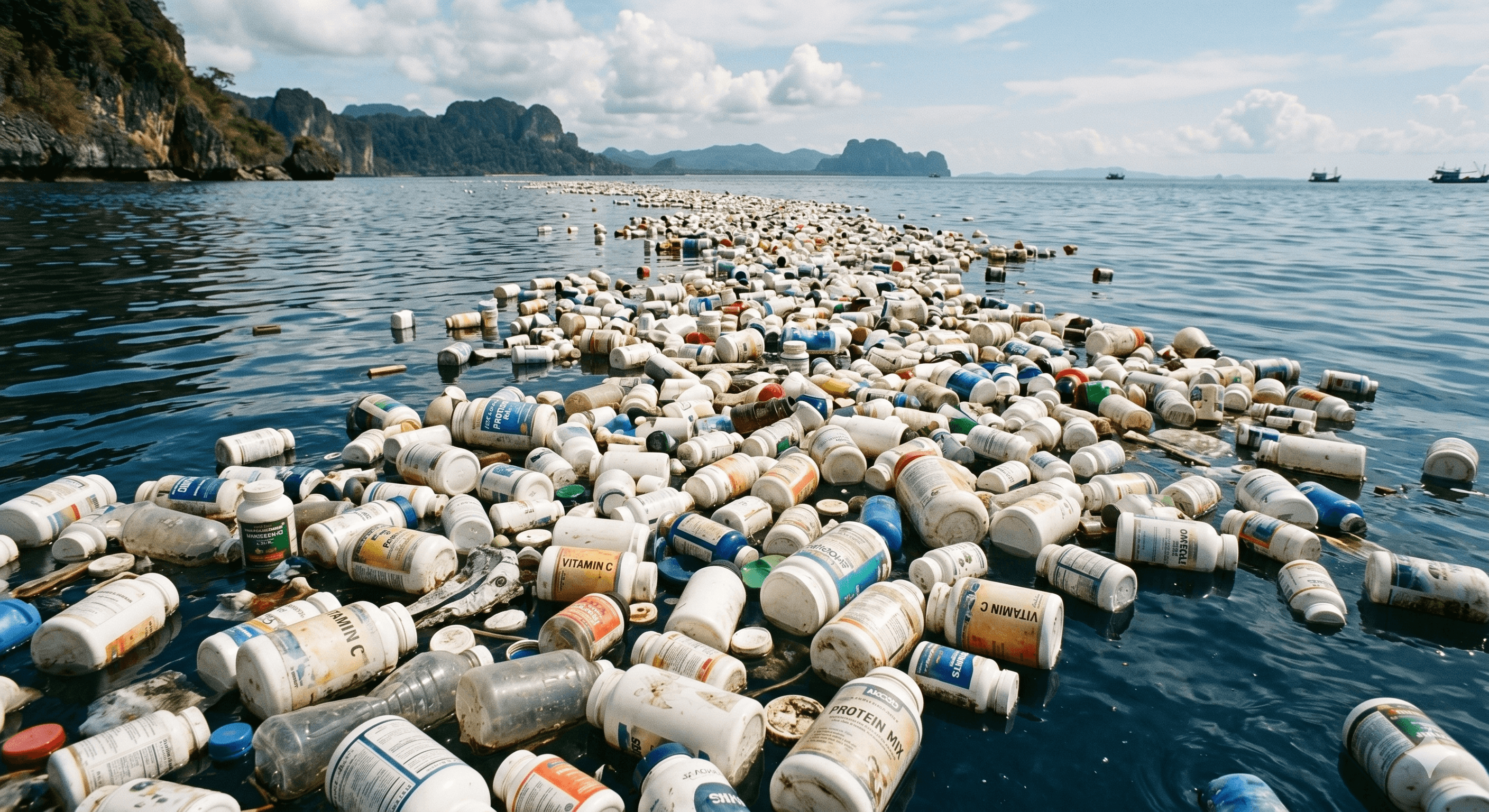
In November 2022, Oceana — one of the largest ocean-conservation NGOs in the world — published a report titled “Bioplastic Remains Plastic: Bio-based, biodegradable and compostable plastics — False solutions to the plastic crisis in the ocean.”Their argument: most plastics marketed as “biodegradable” do not actually break down in cold seawater. People litter more when they believe a product is eco-friendly. Industrial composting standards don't reflect what happens in the ocean. Plant-based plastics like PLA still take centuries to degrade at sea.
They are largely correct about the materials they studied.PLA does not biodegrade meaningfully in seawater. Bio-based plastic made from sugarcane is chemically identical to fossil PET and behaves the same way. Compostable plastics don't compost in non-composting environments. The behavioral data on green labeling and littering is real.
But the report makes one critical mistake: it treats every “biodegradable” plastic as if they all use the same chemistry. They don't. BioBottles® are an entirely different category — one the report doesn't analyze, doesn't include in its framework, and doesn't address with the peer-reviewed evidence that already exists.
THE CATEGORY ERROR
Two different technologies. One shared label. A lot of confusion.
Every report critical of “biodegradable plastic” usually means one of two very different things. Conflating them is how this conversation goes off the rails.
WHAT THE OCEANA REPORT IS ABOUT
Plant-based bioplastics (PLA, PHA, PBAT)
- Made from plant feedstocks like corn, sugarcane, potato starch
- Designed to biodegrade in industrial composting facilities at 50–70°C
- Use hydrolysis — a process that fails in cold seawater
- Have been shown to biodegrade only 2.5% after 600 days in marine conditions
- Can disrupt conventional HDPE/PP recycling streams
- Drive monoculture farming for feedstock production
Oceana's critique applies. We don't disagree.
WHAT BIOBOTTLES® ACTUALLY ARE
Oxo-biodegradable HDPE with PlasticIQ®
- Standard food-grade HDPE with a small (∼1%) prodegradant catalyst additive
- Triggered by UV light, heat, and mechanical stress — conditions that exist everywhere, including at sea
- Use oxidative chain scission — the chemistry doesn't depend on warm water
- Validated under ASTM D6954 Tier 1–3: oxidation, microbial consumption, and ecotoxicity
- Recycle through standard HDPE streams — same as any normal HDPE bottle
- FDA food-contact compliant. No phthalates, no BPA, no triclosan
- No agricultural feedstock. No deforestation impact
Different chemistry. Different mechanism. Different outcome.
HOW BIOBOTTLES® BREAK DOWN
A two-step process that doesn't need warm water or a compost facility.
Oxidation triggers chain scission
UV light, heat, and mechanical stress oxidize the polymer chain. Molecular weight drops from hundreds of thousands of Daltons to under 5,000 Daltons — small enough for bacteria to metabolize. This step works in the atmosphere, on a beach, in coastal water, in landfill, and in the mid-water column. Anywhere oxygen and light reach. The exact opposite of how PLA breaks down.
Bacteria consume what is left
Once below the 5,000-Dalton threshold, common environmental bacteria treat the fragments as a carbon source. They consume the material into biomass, water, and CO₂. In aerobic environments, that's the full picture. In anaerobic environments, the same bacteria produce methane plus the same outputs — the chemistry continues, just at a different rate.
THE PEER-REVIEWED EVIDENCE THAT ALREADY EXISTS
The Oceana report says no science backs this up. The science exists.
QUEEN MARY UNIVERSITY OF LONDON · 2020
90× faster
Rose, Richardson, Latvanen, Hanson, & Sanders measured bacterial respiration with plastic as the sole carbon source. LDPE containing a prodegradant catalyst (the same family of additive used in BioBottles®) biodegraded 90 times more than ordinary LDPE after 35 days. The bacterial strains used were common to both soil and marine environments.
OXOMAR · 5-YEAR FRENCH GOVERNMENT STUDY · 2022
4 independent labs
Sponsored by France's Agence Nationale de la Recherche, conducted across four independent laboratories (CNEP, LOMIC, ICCF, and IFREMER — France's national marine research institute). Conclusion: oxo-biodegradable plastics biodegrade in seawater with significantly higher efficiency than conventional plastics. Independent ASTM D6954 lab confirmations of the same material: 95.05% biodegradation (Intertek) and 88.9% (Eurofins).
SCIENTIFIC REPORTS · 2025
Marine bacteria identified
Gordonia alkanivorans strains PBM1 and PSW1, isolated from the Mediterranean Sea, demonstrated peer-reviewed LDPE biodegradation. Multiple other studies have identified marine bacteria capable of consuming polyethylene — including Alcanivorax borkumensis, Pseudomonas, Lysinibacillus, and Pseudoalteromonas (deep-sea, cold-loving). The bacteria are there. The chemistry works.
The Oxomar study was completed the same year the Oceana report was published. The Oceana report does not mention it. A five-year government-funded marine study of the exact technology category they critique — missing from the report.
TWO OUTCOMES. ZERO MICROPLASTICS.
Recycle it. Or let bacteria consume it. Either way, no persistent microplastics.
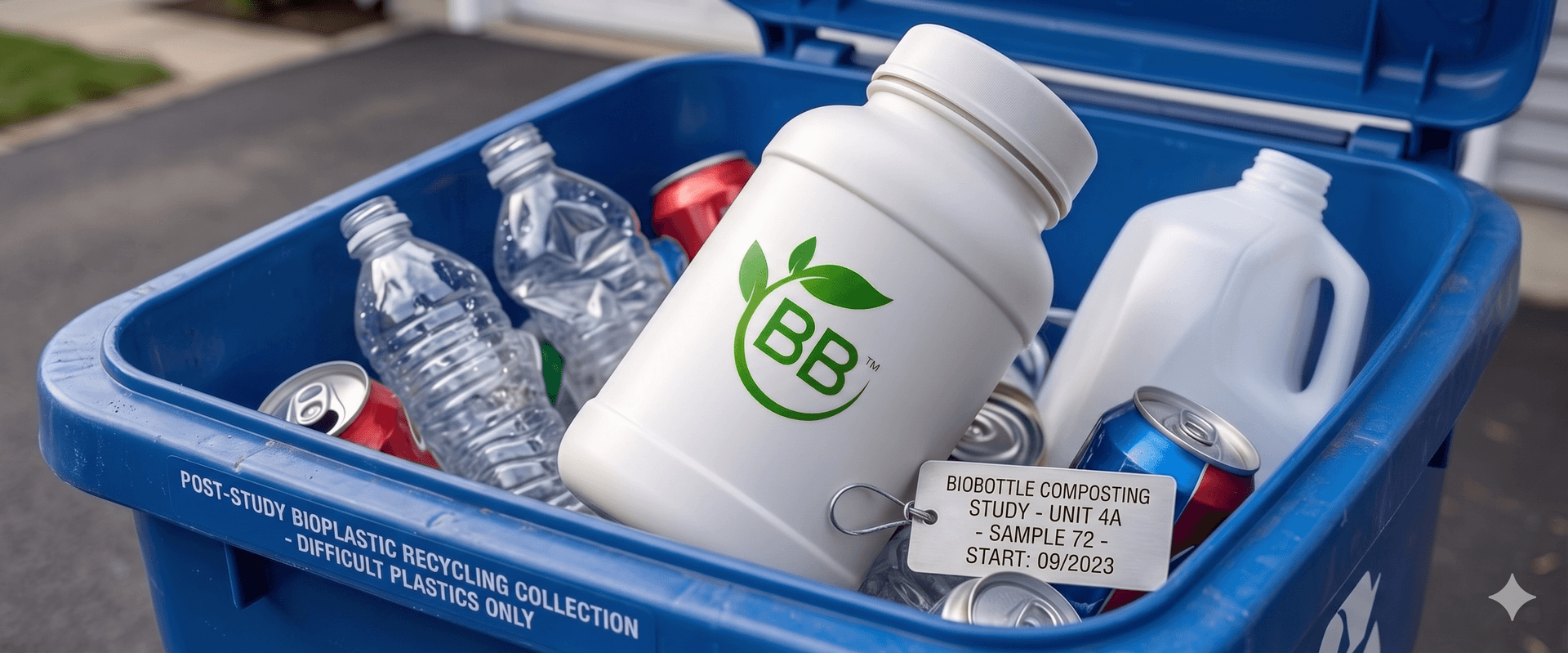
The Expected Path
BioBottles® go through standard HDPE recycling streams. The PlasticIQ® catalyst at 1% concentration does not contaminate the stream. No special bin. No special collection. No special instructions for the consumer.
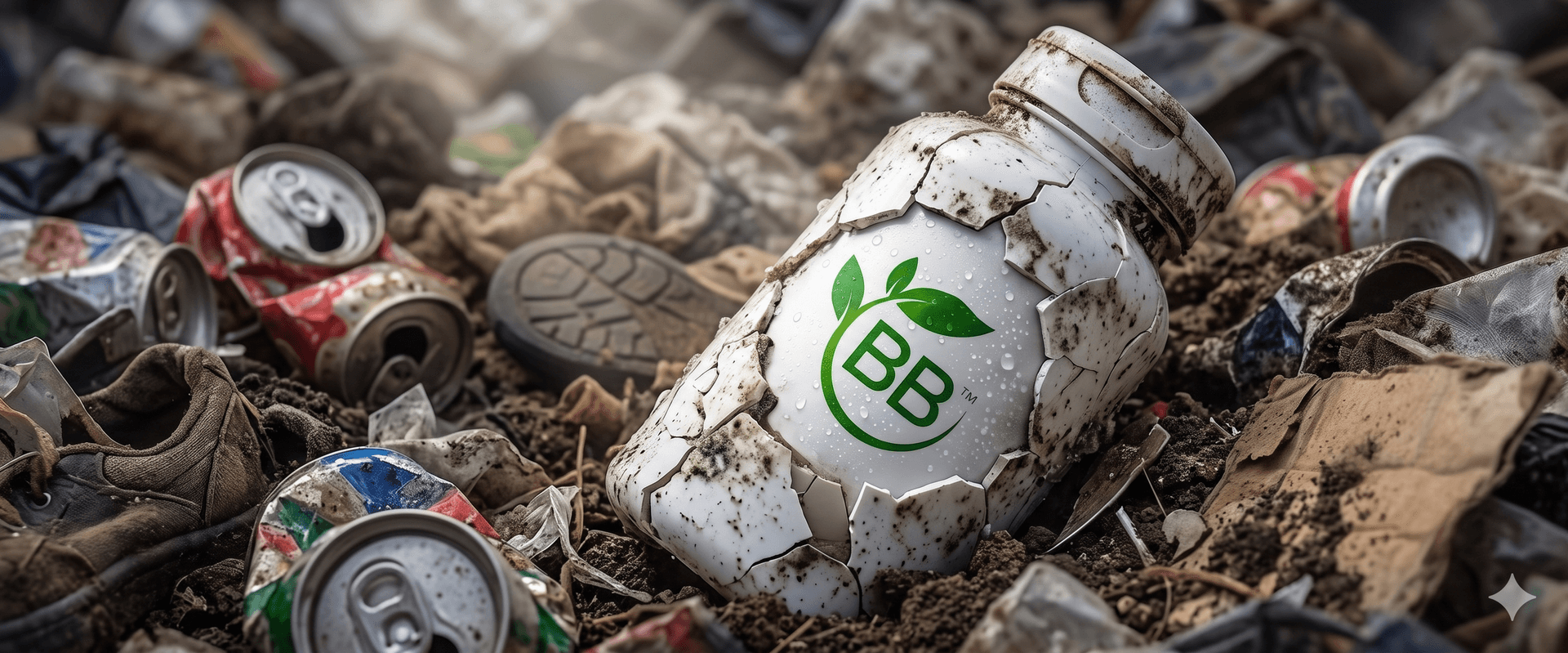
If It Escapes
If a BioBottle® ends up in a landfill, ditch, river, or ocean, the chemistry takes over. UV, heat, and mechanical stress trigger chain scission. Bacteria consume the fragments. The material returns to biomass, water, and CO₂ instead of persisting for 400 years as microplastics.
ADDRESSING THE HARDEST QUESTION
What about the deep sea, where oxygen is limited?
The Oceana report's strongest critique that touches BioBottles®is about the deep sea: low oxygen, low light, high pressure, cold temperatures. They are right that oxidative chain scission slows under those conditions. We don't dispute this.
But three things are also true:
01
Bacteria still work in low oxygen
Anaerobic biodegradation is a documented, industrial-scale process. Bacteria produce methane, CO₂, water, and biomass from organic substrates without oxygen. Peer-reviewed studies have identified specific marine bacteria capable of biodegrading polyethylene in deep-sea sediment, including Alcanivorax, Pseudomonas, Lysinibacillus, Gordonia, and the cold-loving Pseudoalteromonas. Slower than at the surface. Not zero.
02
Most bottles never arrive intact
A BioBottle®that escapes containment spends most of its life in oxygenated environments before reaching the seafloor — atmosphere, beach, coastal water, mid-water column. By the time it arrives at deep-sea sediment, oxidation is already well underway. The chemistry doesn't restart from zero when it hits the bottom.
03
The honest comparison still wins
Conventional HDPE in the same deep sea biodegrades essentially zero percent. It persists for centuries. BioBottles®biodegrade slower in the deep sea than at the surface — but measurably faster than conventional plastic in identical conditions. Slower than ideal beats not at all.
THE QUESTION THAT REFRAMES THE WHOLE DEBATE
If reduction and reuse aren't happening at scale,
why oppose the option that is actually better?
The Oceana report's policy position is that the world should reduce plastic consumption and reuse what we already have. We agree with this completely. In a world where reduction and reuse were actually happening at scale, BioBottles® would be a backup, not a centerpiece.
That world doesn't exist.
Plastic production is still growing. Eleven million metric tons flow into the ocean every year today; twenty-nine million are projected by 2040 even with current policy efforts. Conventional plastic is what is actually being thrown out, washed away, and floating in the Pacific Gyre right now. The choice on the ground — in supermarkets, in supplement aisles, on factory floors — is not between BioBottles® and a perfectly reduced future. It is between BioBottles® and the conventional HDPE bottle next to it.
Option on the shelf
What happens when it escapes
Conventional HDPE bottle
Persists 400–500 years. Fragments into permanent microplastics. Zero biodegradation.
BioBottle®
Oxidation triggers chain scission. Bacteria consume the fragments. Material returns to biomass, water, and CO₂. Validated under ASTM D6954.
No plastic at all
The ideal Oceana advocates for. Not happening at scale in any current global trajectory.
The Oceana report treats the second option as equivalent to the first, then advocates for the third. But the third is not on the menu of any supplement company shipping product this year. The question isn't which plastic is perfect. The question is which plastic is on the shelf, and what happens if it gets out.
Opposing the option that is measurably better — in the name of an ideal option that isn't materializing — keeps the worst option in place. We don't think that serves the oceans Oceana exists to protect.
WHERE WE AGREE WITH OCEANA
The point of this page isn't to dismiss the report. It is to be specific.
Reduce and reuse beat any end-of-life solution
We say this on our own site. Biodegradability is a backup against what happens when plastic escapes containment — not a license to use more of it.
PLA does not biodegrade meaningfully at sea
The peer-reviewed data is clear. Hydrolysis-based bioplastics fail in cold seawater. That is a real problem with a real category of products. It is not a problem with ours.
Bio-based does not equal biodegradable
A sugarcane-derived PET bottle is chemically identical to a fossil-derived PET bottle. The plant origin doesn't change end-of-life behavior. Consumers deserve to know this.
Green labeling can change disposal behavior
The behavioral data on consumer perception of “eco-friendly” products is real. Any biodegradability messaging should be paired with responsible-disposal guidance, not used as permission to litter.
Compostable means industrial composting
Compostable plastics need industrial-composting conditions to actually compost. They don't belong in regular waste streams or natural environments. Don't buy them for products that won't reach a composting facility.
Deep-sea conditions are difficult
Cold, dark, low-oxygen sediment is a challenging environment for any biodegradation. We work fastest at the surface. Slower in the deep sea. Conventional plastic works at zero in either environment.
SUPPLEMENT BRANDS ALREADY USING BIOBOTTLES®
The brands that read this report and made the switch anyway.

Want to read our peer-reviewed data?
Or just see the bottles in person?
BioBottles® are not a marketing claim. The chemistry is documented, the standards are published, the studies are peer-reviewed. We're happy to share all of it. Send a sample request and tell us what your team needs to evaluate.