What do BioBottles® do that ordinary bottles do not?
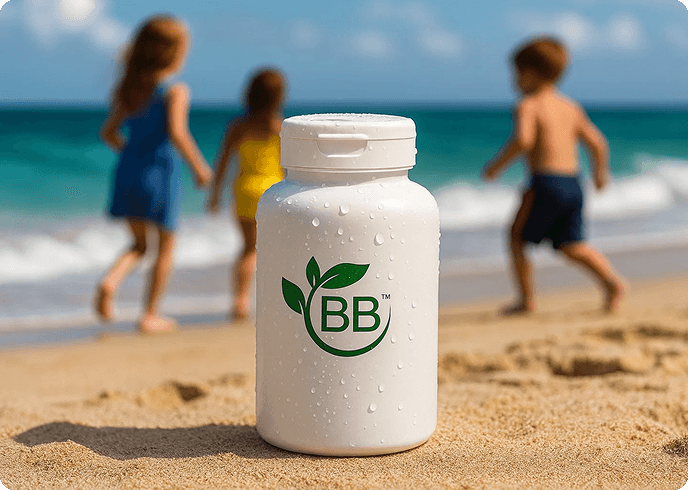
No microplastics. BioBottles® are made with PlasticIQ® technology so they leave no microplastics behind, while performing like standard HDPE bottles and remaining recyclable where programs exist. Please recycle.
Who makes BioBottles®?
BioBottles® and BioCaps® are made by GreenFrog Packaging®, the company that created the brand and owns the PlasticIQ® technology inside every bottle. They are manufactured in the USA. Brands buy direct from GreenFrog Packaging or through its authorized distributors.
Are BioBottles® food-grade safe?
Yes. BioBottles® are FDA-compliant and meet food-grade standards.
Do BioBottles® work with my existing production lines?
Yes. They run on existing equipment without reformulation, downtime, or operational changes.
Will they increase my packaging costs?
No. BioBottles® are cost-comparable to traditional bottles, averaging no more than 5–10¢ more per unit.
Do they leave behind microplastics?
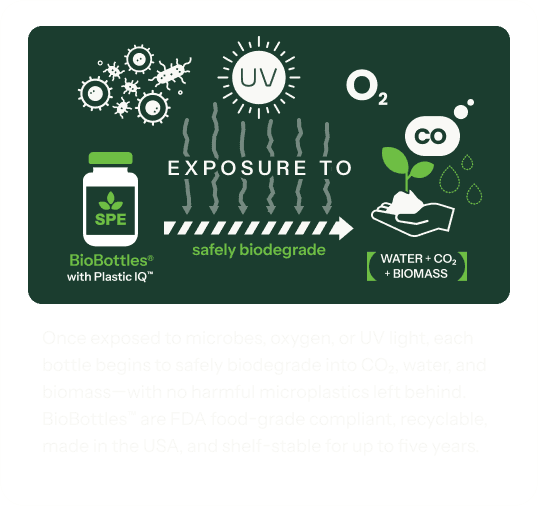
No. BioBottles® break down into oxygen, CO₂, and renewable organic material — leaving no microplastic residue.
What is PlasticIQ® Technology?
PlasticIQ® is a Prodegradant BioPolymer Catalyst added to HDPE and PP at approximately 1% concentration. When the material is exposed to oxygen, heat, and UV light, the catalyst initiates controlled oxidative chain scission, which reduces the polymer's molecular weight. It is not an enzyme, and it does not change how the bottle looks, performs, or stores in normal use.
How long is shelf life before degradation begins?
BioBottles® remain stable and fully functional for over 5 years under normal storage conditions.
Are BioBottles® recyclable?
Yes, where programs exist. BioBottles® are recyclable through existing HDPE recycling systems when properly disposed and collected. Local programs may vary.
Do BioBottles® meet regulatory standards?
BioBottles® and BioCaps® are FDA food-contact compliant, meeting 21 CFR §177.1520, §178.2010, and §175.300, as well as EU 10/2011. The microplastic-prevention performance is verified under ASTM D6954 Tier 1-3 testing.
What scientific proof supports this?
Independent studies (e.g., Queen Mary University of London) show BioBottles® degrade up to 90 times faster than ordinary plastic and are non-toxic on land and sea.
Where are BioBottles® manufactured?
In the USA. BioBottles® are made by GreenFrog Packaging®, which owns the PlasticIQ® technology inside every bottle, ensuring quality and reliable supply.
Can I get custom colors or branding?
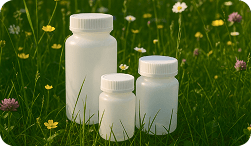
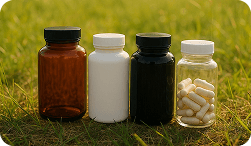
Yes. Standard stock comes in black and white, but custom color matching is available.
Can BioBottles® help me make compliant sustainability claims?
Yes, but the exact wording is market-specific. The science behind BioBottles® supports credible claims; what you are permitted to say depends on where you sell. In the United States, claims are framed to meet FTC Green Guides and California SB 343, and recyclability is always qualified. Other markets have their own approved language, which we provide for each country you sell into.
What testing supports the microplastic-prevention claim?
BioBottles® are verified under ASTM D6954, a three-tier protocol. Tier 1 confirms controlled oxidation and molecular-weight reduction. Tier 2 measures CO₂ evolution and microbial assimilation. Tier 3 confirms that no harmful residues remain. Testing data is available to support your substantiation needs.
Can I market BioBottles® as biodegradable?
It depends on the market. In the United States, BioBottles® should be described by the chemistry — controlled oxidation engineered to help prevent persistent microplastic formation — rather than the unqualified word biodegradable, which is restricted under FTC substantiation rules. In a number of other countries that claim is permitted or officially recognized. We can provide the approved language for each market.
What is the difference between BioBottles® and BioCaps®?
BioBottles® are HDPE bottles and BioCaps® are PP caps. Both contain approximately 1% PlasticIQ® Prodegradant BioPolymer Catalyst, both are designed to work together, and both are FDA food-contact compliant.
If plastic can be recycled, why are BioBottles® needed?
Recycling alone does not solve the problem. Only about 9% of global plastic waste is recycled; most is landfilled, incinerated, or mismanaged, where ordinary plastic fragments into microplastics. BioBottles® are recyclable through existing systems where programs exist, and they are made with PlasticIQ® technology so they leave no microplastics behind.
Why do microplastics matter?
Microplastics have been found in human arterial plaque and linked, in a 2024 New England Journal of Medicine study, to a significantly higher risk of heart attack and stroke. Researchers at Fudan University and Duke University also found in 2026 that microplastics on the ocean surface increase heat absorption. BioBottles® are made with PlasticIQ® technology so they leave no microplastics behind.
What happens to a BioBottle® if it escapes into the environment?
In normal use and storage, a BioBottle® performs like any HDPE bottle. If it escapes containment and is exposed to oxygen, heat, and UV, the PlasticIQ® catalyst initiates controlled oxidation that reduces the polymer's molecular weight so it does not persist as microplastics — no microplastics left behind. Where recycling programs exist, BioBottles® can also be recycled.
Which claims can I put on my product and marketing?
Approved claims include: Engineered to help reduce persistent microplastic formation if packaging escapes containment; Contains PlasticIQ® technology that initiates controlled oxidation when exposed to environmental conditions; FDA food-contact compliant; and Recyclable through existing systems when properly disposed and collected, local programs may vary. We tailor the exact wording to your product and market.